
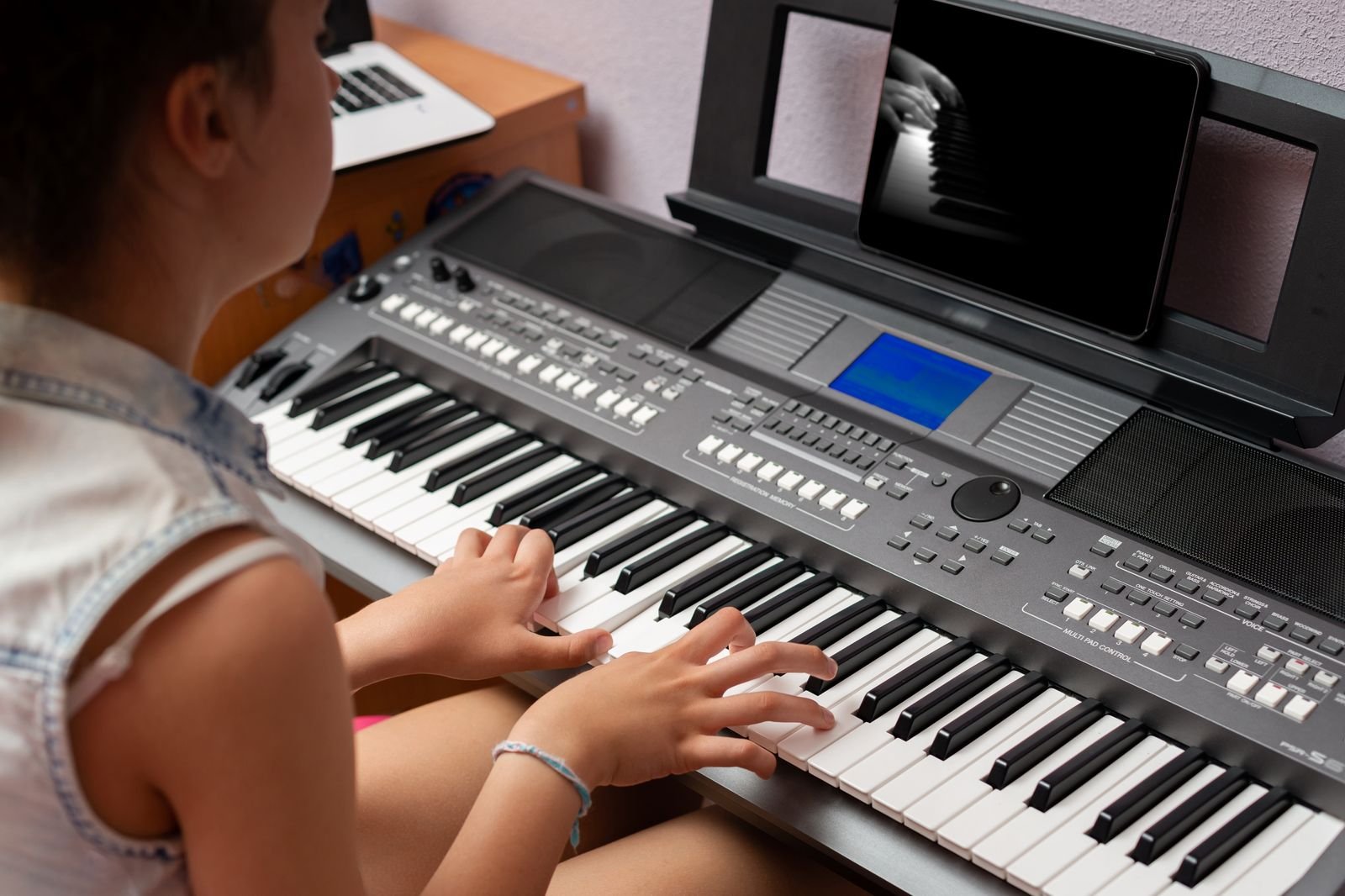
♪ Music Course
Keyboard
A gateway to all music! Help your child master the keyboard.
About WinQuest
At WinQuest, we believe that everyone has the potential to unlock their musical talents and start their journey of self-expression. WinQuest provides high-quality, accessible, and engaging online music classes for learners of all ages and skill levels.
We strive to break down barriers to learning and empower individuals from diverse backgrounds to pursue their passion for music, regardless of their geographical location, financial means, or previous experience.
With WinQuest, learners have access to a comprehensive curriculum covering a wide range of musical instruments, genres, and topics. Whether you're a complete beginner or an experienced musician looking to refine your skills, our expert instructors will guide you through personalized lesson plans tailored to your unique learning goals.
Whether you dream of mastering the piano, shredding on the guitar, or composing your own symphonies, WinQuest is here to help you turn your musical aspirations into reality. Join us today and discover the joy of making music with WinQuest – where the quest for excellence begins.
Why Choose Online Keyboard Classes?
About the Curriculum
A brief on the three internationally recognized music institutions whose course structure we mostly follow for Western Music Students.
Associated Board of the Royal Schools of Music (ABRSM)
The Associated Board of the Royal Schools of Music (ABRSM) is an internationally recognized examination board based in the United Kingdom. Established in 1889, ABRSM is one of the leading institutions for music education and assessment worldwide.
ABRSM provides a comprehensive curriculum for music students, offering graded exams and diplomas in various musical instruments, singing, and theory. The curriculum covers a wide range of musical genres and styles, ensuring a holistic development of musicianship. The graded exams consist of practical assessments, where candidates perform pieces, scales, and technical exercises, along with aural and sight-reading components.
The ABRSM curriculum is structured into eight graded levels, starting from Initial and progressing through Grades 1 to 8. Each grade represents an incremental increase in difficulty, allowing students to develop their musical skills gradually. The curriculum emphasizes not only technical proficiency but also musical expression, interpretation, and aural awareness.
In addition to traditional Western classical music, ABRSM incorporates diverse repertoire choices to cater to the varied interests of musicians. Successful completion of ABRSM exams is widely recognized and respected, providing a valuable benchmark for musical achievement and proficiency. The ABRSM curriculum serves as a valuable guide for music educators and students alike, promoting a systematic and well-rounded approach to music learning and assessment.
Trinity College London
Trinity College London, commonly known as Trinity, is a renowned international examination board that focuses on the assessment and certification of musical and performing arts abilities. Established in 1877, Trinity has a rich history in providing high-quality examinations and certifications in various artistic disciplines.
Trinity's music curriculum encompasses a diverse range of genres and styles, offering graded examinations for instruments, singing, and theory. The graded system consists of eight levels, from Initial to Grade 8, each representing a progressive stage of difficulty and musical proficiency. The curriculum covers practical elements, such as performance, technical exercises, and aural skills, ensuring a well-rounded evaluation of a candidate's musical abilities.
One distinctive feature of Trinity's approach is its emphasis on contemporary and popular music alongside classical genres. This inclusion caters to the diverse interests of musicians and reflects the evolving landscape of musical expression. Trinity's assessments also include a focus on improvisation, allowing candidates to showcase their creativity and adaptability.
In addition to graded exams, Trinity offers diplomas for advanced-level candidates seeking further recognition of their musical accomplishments. The qualifications awarded by Trinity College London are widely respected and recognized globally, providing musicians with a credible benchmark for their artistic achievements. Trinity's curriculum is designed to foster a holistic understanding of music, encouraging both technical proficiency and expressive artistry in performers and educators.
Rockschool Limited
Rockschool Limited is a leading music examination board that specializes in contemporary music genres, particularly rock and pop. Established in 1991, Rockschool has gained prominence for its innovative approach to music education, focusing on the diverse styles of popular music.
The Rockschool curriculum offers graded examinations for electric guitar, bass guitar, drums, vocals, piano, and music theory. The graded system spans from Debut to Grade 8, providing a structured framework for students to develop their skills progressively. This approach ensures that learners are exposed to a variety of musical elements, including technical exercises, performance, and aural skills.
One notable feature of Rockschool's curriculum is its contemporary repertoire, which is carefully curated to reflect current trends in rock, pop, metal, and other modern music genres. This emphasis on relevance and inclusivity allows students to engage with music that resonates with their interests, making the learning experience more enjoyable and motivating.
Rockschool examinations often incorporate real-world music scenarios, such as playing in a band or recording a track, providing a practical and immersive assessment experience. This approach aligns with the demands of the modern music industry and prepares students for real-world performance situations.
Level 1
Exam Preparation Target+
- Prep for Rockschool Keyboard Debut & Grade 1
- Prep for Trinity Keyboard Initial & Grade 1
- Prep for ABRSM Keyboard Initial & Grade 1
Basic Elements of the Keyboard+
- Identify keys and notes on the keyboard
- Posture and finger positioning
Rhythm and Timing+
- Beats, rhythm and time signatures
- Basic rhythm and timing exercises
Introduction to Notation+
- Staff notations — clefs, note values, etc.
- Dynamics, slurs, tie notes and dotted rhythms
Playing in Key Positions+
- Songs in Middle 'C', 'C' and 'G' positions
- Chords and basic music theory in context
Techniques and Forms+
- Proper technique and hand form
- Staccato, legato and other forms
Major Scales and Chords+
- Major scales and primary chords
- Chord inversions and applications
Introduction to Voice Learning+
- Singing along with playing
- Singing exercises to improve musicality
Key Signatures and Advanced Rhythms+
- Key signatures and syncopation
- Swing rhythm and applications
Advanced Keys and Scales+
- Key of 'F' Major and minor keys
- Transposition exercises
Learning Outcomes+
- Identify keys/notes and demonstrate posture & finger positioning
- Read staff notation and apply dynamics and articulation
- Master major scales, primary chords and inversions
- Integrate voice learning with keyboard playing
- Build a diverse repertoire for certification exams
Repertoire Building & Exam Prep
- Repertoire across styles and genres
- Pieces for RSL Debut, ABRSM Initial and Trinity Initial
- Exam-style questions, performance skills and stage presence
Repertoire — ABRSM Initial & Grade 1
- ABRSM Initial — Piece 1: Twinkle, Twinkle, Little Star (arr.); Piece 2: Minuet in G (J.S. Bach); Piece 3: Clocks (Coldplay, simplified)
- ABRSM Grade 1 — Piece 1: Musette in D Major (J.S. Bach); Piece 2: Sonatina in C Major, Op.36 No.1, 1st mvt (Clementi); Piece 3: In the Hall of the Mountain King (Grieg, simplified)
Repertoire — Trinity Initial & Grade 1
- Trinity Initial — Piece 1: London Bridge Is Falling Down (arr.); Piece 2: Minuet in G (Beethoven, simplified); Piece 3: Can't Help Falling in Love (Elvis Presley, simplified)
- Trinity Grade 1 — Piece 1: Bourrée in E Minor (J.S. Bach, simplified); Piece 2: Sonatina in C Major, Op.36 No.1, 1st mvt (Clementi); Piece 3: Let It Be (The Beatles, simplified)
Repertoire — RSL Debut & Grade 1
- RSL Debut — Piece 1: Let It Go (Idina Menzel, simplified); Piece 2: C Blues Shuffle; Piece 3: Samba Groove
- RSL Grade 1 — Piece 1: Imagine (John Lennon, simplified); Piece 2: Blue Monk (Thelonious Monk, simplified); Piece 3: Bossa Nova Groove
Level 2
Exam Preparation Target+
- Prep for Rockschool / Trinity / ABRSM Keyboard Grades 2, 3 and 4
- Prerequisites: proficiency in major/minor scales, basic music theory, chord progressions
Intermediate Major and Minor Scales+
- Scales beyond basic levels
- Scales in 'D', 'A' and 'Bb' keys
Triads in 12-Bar Blues+
- Triads and their application in the 12-bar blues progression
- Role of harmony in blues music
Chromatic and Pentatonic Scales+
- Chromatic and pentatonic scales for melodic exploration
- Improvisation exercises using these scales
Advanced Rhythm Techniques+
- Deeper rhythmic patterns and syncopation
- Complex rhythms across musical styles
Introduction to Arpeggios+
- Arpeggios and their applications in chord progressions
- Arpeggio exercises for finger dexterity and musicality
Learning Outcomes+
- Master scales in 'D', 'A' and 'Bb'
- Play repertoire fluently in various keys with expression
- Apply triads in 12-bar blues
- Use chromatic & pentatonic scales for improvisation
- Develop arpeggio proficiency
Repertoire Playing in Various Keys
- Repertoire in different keys
- Fluency and expression in each key
Repertoire — ABRSM Grades 2–4
- Grade 2 — Piece 1: Minuet in G Minor (J.S. Bach); Piece 2: Sonatina in C Major, Op.36 No.3, 1st mvt (Clementi); Piece 3: Prelude in C Major, Op.28 No.1 (Chopin, simplified)
- Grade 3 — Piece 1: Sarabande in D Minor (Handel); Piece 2: Sonata in G Major, Hob. XVI:G1, 1st mvt (Haydn); Piece 3: Prelude in E Minor, Op.28 No.4 (Chopin, simplified)
- Grade 4 — Piece 1: Gigue in G Major (J.S. Bach); Piece 2: Sonata in C Major, K.545, 1st mvt (Mozart); Piece 3: Nocturne in C Minor, Op.48 No.1 (Chopin, simplified)
Repertoire — Trinity Grades 2–4
- Grade 2 — Piece 1: Prelude in C Major, BWV 846 (J.S. Bach); Piece 2: Sonatina in G Major, Op.36 No.5, 1st mvt (Clementi); Piece 3: Waltz in A Minor, Op. Posth. 34 No.2 (Chopin, simplified)
- Grade 3 — Piece 1: Siciliano in G Minor (J.S. Bach); Piece 2: Sonata in C Major, Hob. XVI:35, 1st mvt (Haydn); Piece 3: Arabesque No.1 (Debussy, simplified)
- Grade 4 — Piece 1: Gigue in G Major (J.S. Bach); Piece 2: Sonata in A Major, K.331, 1st mvt (Mozart); Piece 3: Prelude in D-flat Major, Op.28 No.15 'Raindrop' (Chopin, simplified)
Repertoire — RSL Grades 2–4
- Grade 2 — Piece 1: Hallelujah (Leonard Cohen, simplified); Piece 2: Blues in F; Piece 3: Samba Carnival
- Grade 3 — Piece 1: Clocks (Coldplay, simplified); Piece 2: Autumn Leaves (simplified); Piece 3: Salsa Fever
- Grade 4 — Piece 1: Bohemian Rhapsody (Queen, simplified); Piece 2: Take Five (Dave Brubeck, simplified); Piece 3: Bossa Nova Jam
Level 3
Exam Preparation Target+
- Prep for Rockschool / Trinity / ABRSM Keyboard Grades 5, 6, 7 and 8
- Prerequisites: music theory & advanced notation, ear training & improvisation, advanced performance, complex rhythms & arpeggios
Extended Major and Minor Scales+
- Extended scales across the keyboard
- Fluency and expression in different keys
Advanced Repertoire Interpretation+
- Nuanced expression and stylistic accuracy
- Historical and musical context of repertoire
Extended Harmony and Chord Progressions+
- Extended chords and complex progressions
- Applying harmony to improvisation and composition
Advanced Rhythmic Studies+
- Complex rhythmic patterns and polyrhythms
- Rhythmic improvisation across genres
Advanced Arpeggios and Articulation+
- Advanced arpeggio patterns across chord structures
- Precise articulation and control
Advanced Sight-Reading and Score Interpretation+
- Sight-reading complex passages
- Interpreting scores with deeper structural understanding
Performance Preparation and Practice Techniques+
- Intensive practice methods
- Effective performance preparation and stage presence
Musical Analysis & Creative Projects+
- In-depth analysis — formal structures and thematic development
- Composition, arrangement and collaborative / ensemble performance
Learning Outcomes+
- Mastery of extended scales and advanced harmony
- Perform repertoire with nuanced expression and stylistic accuracy
- Analyse complex rhythms and polyrhythms
- Advanced sight-reading and creative projects
- Mastery of grade-specific exam requirements
Repertoire — ABRSM Grades 5–8
- Grade 5 — Piece 1: Prelude and Fugue in C Major, BWV 846 (J.S. Bach, WTC); Piece 2: Sonata in G Major, Hob. XVI:G1, 1st mvt (Haydn); Piece 3: Clair de Lune (Debussy, simplified)
- Grade 6 — Piece 1: Italian Concerto, BWV 971, 1st mvt (J.S. Bach); Piece 2: Sonata in C Minor, Op.13 'Pathétique', 2nd mvt (Beethoven); Piece 3: Étude Op.10 No.3 'Tristesse' (Chopin, simplified)
- Grade 7 — Piece 1: Partita No.1 in B-flat Major, BWV 825, 1st mvt (J.S. Bach); Piece 2: Sonata in B Minor, K.27 (Scarlatti); Piece 3: Ballade No.1 in G Minor, Op.23 (Chopin, simplified)
- Grade 8 — Piece 1: Goldberg Variations, BWV 988, Variation 1 (J.S. Bach); Piece 2: Sonata in A Major, K.331, 3rd mvt 'Alla Turca' (Mozart); Piece 3: Étude Op.25 No.11 'Winter Wind' (Chopin, simplified)
Repertoire — Trinity Grades 5–8
- Grade 5 — Piece 1: Prelude and Fugue in D Major, BWV 850 (J.S. Bach, WTC); Piece 2: Sonata in D Major, Hob. XVI:37, 1st mvt (Haydn); Piece 3: Arabesque No.1 (Debussy, simplified)
- Grade 6 — Piece 1: Italian Concerto, BWV 971, 3rd mvt (J.S. Bach); Piece 2: Sonata in C Major, K.330, 1st mvt (Mozart); Piece 3: Nocturne in E-flat Major, Op.9 No.2 (Chopin, simplified)
- Grade 7 — Piece 1: Prelude and Fugue in E Minor, BWV 855 (J.S. Bach, WTC); Piece 2: Sonata in B-flat Major, Hob. XVI:41, 1st mvt (Haydn); Piece 3: Prelude in D Minor, Op.28 No.24 (Chopin, simplified)
- Grade 8 — Piece 1: Goldberg Variations, BWV 988, Aria (J.S. Bach); Piece 2: Sonata in E-flat Major, Op.81a 'Les Adieux', 1st mvt (Beethoven); Piece 3: Ballade No.4 in F Minor, Op.52 (Chopin, simplified)
Repertoire — RSL Grades 5–8
- Grade 5 — Piece 1: Bohemian Rhapsody (Queen, simplified); Piece 2: Blue Monk (Thelonious Monk, simplified); Piece 3: Tango of the Night
- Grade 6 — Piece 1: Stairway to Heaven (Led Zeppelin, simplified); Piece 2: Autumn Leaves (simplified); Piece 3: Salsa Heatwave
- Grade 7 — Piece 1: Boogie Woogie; Piece 2: Take Five (Dave Brubeck, simplified); Piece 3: Samba Fusion
- Grade 8 — Piece 1: Killer Queen (Queen, simplified); Piece 2: Giant Steps (John Coltrane, simplified); Piece 3: Latin Fusion Odyssey
Reference Song List
Beginner Keyboard Songs (50)+
- Let It Be (The Beatles) · Hallelujah (Leonard Cohen) · Twist and Shout (The Beatles) · Lean on Me (Bill Withers) · Imagine (John Lennon)
- Wonderwall (Oasis) · Stand by Me (Ben E. King) · Can't Help Falling in Love (Elvis Presley) · Yellow Submarine (The Beatles) · Don't Stop Believin' (Journey)
- I'm Yours (Jason Mraz) · Someone Like You (Adele) · Hey Jude (The Beatles) · What a Wonderful World (Louis Armstrong) · Clocks (Coldplay)
- Your Song (Elton John) · Brown Eyed Girl (Van Morrison) · Every Breath You Take (The Police) · Piano Man (Billy Joel) · I Will Always Love You (Whitney Houston)
- A Thousand Years (Christina Perri) · With or Without You (U2) · Let It Go (Frozen) · Fields of Gold (Sting) · All of Me (John Legend)
- I Want to Hold Your Hand (The Beatles) · Love Me Tender (Elvis Presley) · Just the Way You Are (Bruno Mars) · True Colors (Cyndi Lauper) · Tears in Heaven (Eric Clapton)
- Yesterday (The Beatles) · I Can See Clearly Now (Johnny Nash) · Let Her Go (Passenger) · The Lion Sleeps Tonight (The Tokens) · Ain't No Sunshine (Bill Withers)
- Somewhere Over the Rainbow (Judy Garland) · Bridge Over Troubled Water (Simon & Garfunkel) · Every Rose Has Its Thorn (Poison) · You Are My Sunshine (Traditional) · Three Little Birds (Bob Marley)
- Love Me Do (The Beatles) · Hey Soul Sister (Train) · Jolene (Dolly Parton) · I'm a Believer (The Monkees) · Yellow (Coldplay)
Intermediate Keyboard Songs (50)+
- Bohemian Rhapsody (Queen) · Clocks (Coldplay) · Don't Stop Believin' (Journey) · Someone Like You (Adele) · Let It Be (The Beatles)
- Hotel California (Eagles) · A Thousand Years (Christina Perri) · Imagine (John Lennon) · Hey Jude (The Beatles) · Hallelujah (Leonard Cohen)
- Wonderwall (Oasis) · Stairway to Heaven (Led Zeppelin) · Piano Man (Billy Joel) · Lean on Me (Bill Withers) · I Will Always Love You (Whitney Houston)
- Rocket Man (Elton John) · Boogie Wonderland (Earth, Wind & Fire) · Dream On (Aerosmith) · November Rain (Guns N' Roses) · Fix You (Coldplay)
- Bridge Over Troubled Water (Simon & Garfunkel) · Africa (Toto) · Let It Go (Frozen) · The Scientist (Coldplay) · All of Me (John Legend)
- Unchained Melody (The Righteous Brothers) · Angie (The Rolling Stones) · Boogie Woogie Bugle Boy (The Andrews Sisters) · Mad World (Tears for Fears) · Killer Queen (Queen)
- My Immortal (Evanescence) · With or Without You (U2) · Dancing Queen (ABBA) · Sweet Child o' Mine (Guns N' Roses) · Candle in the Wind (Elton John)
- Yesterday (The Beatles) · Livin' on a Prayer (Bon Jovi) · Georgia on My Mind (Ray Charles) · Wish You Were Here (Pink Floyd) · Stand by Me (Ben E. King)
- The Sound of Silence (Simon & Garfunkel) · Chandelier (Sia) · Space Oddity (David Bowie) · Fly Me to the Moon (Frank Sinatra) · I Don't Want to Miss a Thing (Aerosmith) · How to Save a Life (The Fray)
Hindustani Keyboard
Level 1 — Foundation+
- Understanding Swaras & keyboard basics — Shuddha/Komal/Teevra Swar; Shruti, Naad, Aaroh-Avroh, Saptak; simple Alankaars
- Posture and hand/finger placement; finger agility & coordination
- Tanpura-style drone (Sa..Pa..Sa..) and singing with keyboard accompaniment
- Raag exploration — Thaat, Vaadi/Samvadi/Anuvadi/Vivadi; Aaroh-Avroh & characteristic phrases
- Rhythm & Taal — Matra, Laya, Vibhag, Sum, Taali, Khaali; Dadra, Keherwa, Teentaal
- Keyboard-based Sargam Geet, Lakshan Geet, Chhota Khayal and Bhajan; musical forms & maestros (Pt. V.N. Bhatkhande)
Level 2 — Intermediate+
- Advanced terminology; intricate Alankars; Ragas Khamaj, Yaman, Desh, Bhairav
- Singing styles & forms — Khayal, Thumri, Dhrupad, Bhajan; life & work of Miyan Tansen
- Advanced Taals — Roopak, Jhaptaal, Ektaal; Dugun and Tigun
- Improvisation & ornamentation — Aalap and Taans; Sargam Geet & Lakshan Geet variations
- Chota Khayal performance, composition workshops and ensemble rehearsals
Level 3 — Advanced+
- Advanced theory & Bhatkhande Notation System; Alankars across Thaats
- Layakari rhythmic variations; complex Ragas — Durga, Asavari, Bageshree, Bhairavi
- Vilambit & Bada Khayal; Dhrupad/Dhamaar; Tarana with keyboard adaptation
- Swar Vistaar (melodic elaboration); Chota Khayal in Bhairav, Kedar, Bilawal, Tilak Kamod, Bhairavi, Vrundawani Sarang
- Notation writing and original composition in studied Ragas
Carnatic Keyboard
Level 1 — Foundation+
- Introduction to Carnatic music; Saint Purandara Dasa
- Shruthi, Swaras, Thalam, Kaalam, Sthayis
- Sarali Varase, Janti Varase, Tharasthayi Varase, Mandrasthayi Varase, Dhattu Varase on the keyboard
- Carnatic light + classical songs; expression & nuance
Level 2 — Intermediate+
- Theory & history — Thyagaraja, Muthuswami Dikshitar, Syama Sastri; Carnatic vs Hindustani
- Terminologies — Nada, Swara, Swarasthanas
- Sarali / Janti / Tharasthayi / Dattu Varisais; Alankarams & Nottuswaras
- Eight simple ragams; composition singing; swara pattern exercises for voice culture
Level 3 — Advanced+
- Famous composers — Purandaradasa, Tyagaraja; 12 Saptaswaras & the Music Trinity
- 72 Melakartas; Janaka & Janya ragas; Lakshanageethe & Jathiswara
- Kritis & devotional songs; folk melodies & Nottuswara (M. Dikshitar)
- Alankaras in Raga Mayamalavagoula at varied speeds; geetams & simple Swarajathis
Keyboard Buying Guide
Choosing an electronic keyboard today means navigating a vast and exciting landscape of options — from humble beginner models to professional-grade workstations. Whether you’re just starting out or looking to upgrade, understanding the different types of keyboards is the first step toward making a smart, satisfying purchase. This guide breaks down every major keyboard category, offers practical buying tips, and includes a handy glossary of terms you’ll encounter while shopping.
A Brief History of the Electronic Keyboard
From the 1800s to Today
Each musical instrument has its start somewhere, and the electronic keyboard is no exception. Its fascinating history stretches from early electromechanical experiments in the 1800s all the way to its cultural peak in the 1980s — an era defined by synth-pop, electronic dance music, and the explosion of home recording. Today’s keyboards carry that legacy forward with technology that would have seemed like science fiction just a few decades ago.
While most keyboards look fairly similar on the outside, the differences in their internal architecture, purpose, and target audience are profound. Understanding these distinctions will save you time, money, and frustration when it’s time to buy.
The Keyboard Family: An Overview
Before diving into each type in detail, here’s a high-level map of the major keyboard categories — from the simplest entry-level models all the way to the most sophisticated professional tools.
- Entry-Level — Simple, affordable keyboards for beginners
- Mid-Range — Feature-rich models for power users
- Professional — High-end keyboards for pros and enthusiasts
- Beginner Keyboard — Simple, affordable, and fun — perfect for new students
- Arranger Keyboard — Built-in accompaniment tracks for solo performers
- Digital Workstation — Full creative control for composers and producers
- Synthesizer — Sound design and exotic audio creation
- Organ / Hybrid / Digital Piano — Specialised and versatile instruments for all needs
Beginner Keyboard
Beginner keyboards are designed with the novice student firmly in mind. These instruments are intentionally streamlined — approachable enough that a complete newcomer can sit down and start making music within minutes. They generally range from two to four octaves and offer a limited selection of digitized instrument sounds, giving beginners variety and entertainment without overwhelming complexity.
One of the most noticeable differences between beginner keyboards and more advanced instruments is the absence of weighted keys. Because keyboard keys are made from plastic rather than ivory or felt-padded hammers, they don’t replicate the resistance you’d feel on a real acoustic piano. While this makes them lighter and more portable, it also means that players who eventually transition to an acoustic piano will need to adjust their technique. For a first instrument, though, a beginner keyboard is an excellent, budget-friendly starting point that lets you explore music without a major financial commitment.
- 2–4 Octaves — Compact range ideal for beginners
- Built-in Sounds — Variety of digitized instruments for fun
- Plastic Keys — Lightweight, no weighted action
- Budget-Friendly — Best value for first-time buyers
- Technique Adjustment — Transitioning to acoustic piano requires adaptation
Arranger Keyboard
The One-Man Band Machine
Arranger keyboards break away from the simplistic features of beginner models in a big way. These instruments are all the rage among solo artists who compose spontaneously and want to produce the effect of a full band — all by themselves. The defining feature of an arranger is its extensive library of prerecorded accompaniment tracks, spanning nearly every musical style imaginable: indie rock, reggae, classic country, techno, jazz, bossa nova, and much more.
Beyond their impressive sound libraries, arrangers typically come loaded with voice backup capabilities, chord recognition software, and USB ports for connecting to a computer or external devices. Music played on the keybed can often be recorded and saved directly into the keyboard’s memory bank, making it a powerful tool for songwriting and live performance alike. If you’re a self-contained performer looking to fill a room with sound, the arranger is hard to beat.
Digital Workstation
For musicians who want total creative control over every aspect of an original composition, the digital workstation keyboard is the ultimate tool. These instruments give you the ability to meticulously record data and digitally manipulate it note by note, with a level of precision that no other keyboard type can match. Workstations have everything arrangers have — and significantly more.
Depending on the model, a digital workstation may come standard with its own integrated synthesizer, advanced sequencing capabilities, and multi-track recording functionality. These are the keyboards used by professional composers, film scorers, and studio producers who demand nothing less than complete mastery over their sonic palette. While the learning curve can be steep, the creative ceiling is essentially limitless. If you know that music production is your serious pursuit, investing in a workstation early sets you up for years of professional-grade work.
- Comprehensive Control — Total creative control over composition
- Detailed Editing — Note-by-note digital manipulation
- Advanced Recording — Meticulous data capture and sequencing
- Expanded Features — All arranger tools plus more capabilities
- Multi-Track Recording — Record and layer multiple instruments simultaneously
- Note-by-Note Editing — Pinpoint control over every element of your composition
- Integrated Synthesizer — Many models include built-in synth engines
Synthesizer
Creating Sounds From Scratch
The word "synthesize" means to create something new — either from scratch or by distorting existing material. True to its name, a synthesizer is a means for producing man-made digital and analog sounds and effects that would be impossible to replicate with any acoustic instrument. A synthesizer might look like a conventional keyboard from the outside, but its purposes and functions are completely different from a standard piano or arranger.
Synthesizers are used to invent exotic sounds using analog or digital signal processing — think sweeping pads, laser-like leads, thunderous bass tones, and textures that seem to come from another world entirely. They are the backbone of electronic music genres like ambient, techno, industrial, and synth-pop. If your musical goal is sound design and sonic experimentation rather than learning traditional piano technique, a synthesizer is your instrument of choice. Many professional synths also offer extensive modulation routing, oscillators, filters, and envelope controls that reward deep exploration.
Key Synthesizer Concepts
- Analog vs. digital signal processing
- Oscillators for sound generation
- Filters to shape tonal character
- LFOs for modulation effects
- Envelope controls (ADSR)
- Patch memory for saving sounds
Organ Keyboard
The organ has one of the longest and most storied histories of any keyboard instrument, dating back centuries to massive pipe organs in cathedrals and concert halls. Modern electronic organ keyboards do away with the metal pipes entirely, dramatically reducing size and weight while attempting to faithfully mimic the rich, complex tones of their traditional counterparts.
Preserving Tradition in Modern Form: Certain organ keyboard models have made a deliberate effort to preserve the standard characteristics found on traditional organs. These include drawbars — the sliders that control the mix of different harmonic tones — as well as pedal boards for foot-operated bass notes, and multiple key decks known as manuals. These features are beloved by gospel, jazz, and rock organists who rely on the distinctive "Hammond" sound as a cornerstone of their musical identity. Whether you’re playing church hymns or blues riffs, an electronic organ keyboard can deliver that unmistakable warm, swelling tone.
Hybrid Keyboard
Mix and match any combination of an arranger, digital workstation, synthesizer, organ, or piano — and a hybrid is born. Hybrids possess the best of all worlds in a single, integrated package. Some musicians have a genuine need for multiple keyboard functions across different musical contexts, and a hybrid instrument saves them from having to buy, transport, and maintain separate individual keyboards to satisfy each need.
A hybrid might give you the authentic piano feel of weighted keys alongside the sound-shaping power of a synthesizer engine, the accompaniment libraries of an arranger, and the recording capabilities of a workstation — all under one roof. These instruments tend to be higher-end and more expensive, but for the working musician who wears many hats, the investment pays for itself quickly. Think of a hybrid as the Swiss Army knife of the keyboard world: versatile, practical, and impressively capable.
- Arranger — Accompaniment tracks + chord recognition
- Workstation — Multi-track recording + sequencing
- Synthesizer — Custom sound design + modulation
- Digital Piano — Weighted keys + authentic piano tone
Digital Piano
The Premium End of the Spectrum
Digital pianos cap the upper end of the electronic keyboard spectrum. Grand piano keyboards mimic the external appearance of traditional grand pianos — sleek, elegant, and commanding — but internally they lack the strings and hammers of acoustic instruments. Instead of acoustic resonance, computer chips store digitized recordings of real piano notes, which are released through amplified speakers when keys are pressed.
The best digital pianos feature weighted or graded hammer action keybeds that closely replicate the feel of playing an acoustic grand, complete with heavier resistance in the lower registers and lighter touch in the upper range. High-end models also include features like string resonance simulation, lid position effects, and three-pedal systems. For serious classical pianists or anyone who wants the closest possible acoustic experience without the tuning costs and space requirements of a real grand piano, a digital piano is the definitive choice.
Keyboard Types at a Glance
Use this comparison to quickly identify which keyboard category best matches your needs, skill level, and musical goals.
| Type | Best For | Key Features | Price Range |
|---|---|---|---|
| Beginner Keyboard | New students, children | 2–4 octaves, basic sounds | $ |
| Arranger | Solo performers, songwriters | Accompaniment tracks, chord recognition | $$ |
| Digital Workstation | Composers, producers | Full recording, synthesis, sequencing | $$$ |
| Synthesizer | Sound designers, EDM artists | Custom sound creation, modulation | $$–$$$ |
| Organ | Gospel, jazz, rock players | Drawbars, manuals, pedal boards | $$–$$$ |
| Hybrid | Multi-style working musicians | Combined feature sets | $$$ |
| Digital Piano | Classical pianists, serious students | Weighted keys, acoustic piano feel | $$–$$$$ |
Buying a Keyboard: Where to Start
So you’re ready to bring home a new instrument — it’s an exciting time! But before you run to the music store or start clicking "add to cart," there are some important things to consider. An instrument is a meaningful investment, and you want to get the most for your money. The right keyboard for you depends on your current skill level, your musical goals, your living situation, and yes, your budget.
Whether you’re a brand-new student who has never touched a keyboard, or an experienced player looking to upgrade, the following buying guidelines will help you cut through the noise and find an instrument that truly suits all of your needs. Keep these principles in mind, and you’ll walk away with a keyboard you’ll be happy with for years to come.
Tip 1: Don’t Head Straight for the Newest Technologies
Resist the Shiny Object Trap
Are you a new student or an experienced professional? The newest, top-of-the-line models can impress anyone — their gleaming displays, endless patch banks, and studio-grade features are genuinely exciting. But for a beginner, all that technology can quickly become a distraction from the real priority: learning to play.
A high-tech keyboard can be confusing and even intimidating, and there’s a real possibility it could be outdated by the time you reach a skill level where you can truly appreciate its advanced features. You can find many excellent, high-quality keyboards at very reasonable price points. Most come with large sound libraries and plenty of options to keep things fun and engaging. Focus on building your foundational skills right now, and reward yourself with a more sophisticated instrument further down the road. Your future self — with much more developed ears and technique — will make a far better purchasing decision anyway.
- For Beginners — Prioritise learning fundamentals over features
- For Experienced Users — Explore advanced models and studio-grade tools
Tips 2–4: Pedals, Key Count & Speakers
- Will You Be Able to Use Foot Pedals? Using pedals is a necessary skill for pianists, and if you plan to play a full-sized acoustic piano at any point, you should begin training your feet now. Many keyboards connect to external pedals — you can buy a standard three-pedal platform or purchase pedals individually. Sustain pedals are the most popular starting point. If your budget allows, some models come with built-in pedals integrated into their stands, though these are larger and harder to store.
- Know Your Keyboard Sizes: Standard acoustic pianos have 88 keys, but electronic keyboards come in four main sizes. 76 keys saves money and carries you well into intermediate playing. 61 keys is a great beginner choice — you won’t notice the missing notes early on. 49 keys is the smallest standard size; usable for learning, but you’ll feel the limitations within the first year. Don’t let a smaller size stop you — 49 keys is infinitely better than zero.
- Do You Need to Spend Extra on Speakers? Most keyboards have speakers built directly into their bodies, but it’s worth confirming before you buy. Some more technical models — especially synthesizers and workstations — need to connect to external speakers or monitors to produce sound. This is a surprisingly common oversight that leads to buyer’s remorse. Check the specs, and if external speakers are required, factor that cost into your total budget.
Tips 5–6: Touch Sensitivity & Polyphony
- Find a Model With "Touch Sensitivity": A keyboard with touch sensitivity (also called velocity sensitivity) allows you to produce a louder note by pressing the key harder — directly mimicking the dynamic response of an acoustic piano. This feature is essential for developing proper piano technique and musical expressiveness. It is still surprisingly common for entry-level keyboards to omit touch sensitivity entirely, so if you’re browsing online or in a store, make sure you look for it explicitly. Playing a keyboard without this feature locks every note at the same volume, which quickly feels robotic and limits your musical growth.
- Will You Be Able to Play Full Chords? Another critical feature is polyphony — the number of individual tones a keyboard can produce simultaneously. Keyboards made for general consumers usually have polyphony, but it can still be limited on cheaper models. A good rule of thumb: look for at least 10-note polyphony. This means you can press all ten fingers down at once and hear every note clearly, without any "dropping out." Higher polyphony (32, 64, or even 128 notes) becomes important when using sustain pedals and complex layered sounds.
Pro Tip: Always test a keyboard in person before buying. Turn it on, play chords, try the full range, press keys at different velocities, and listen carefully to the speaker quality. No spec sheet can replace hands-on experience.
Glossary of Keyboard Terms
The following are common terms you’ll encounter when shopping for a keyboard, piano, or synthesizer. Use this reference as you browse — understanding these terms will help you compare specs confidently and ask the right questions at the music store.
- A/D & D/A Conversion: Converting analog signals to digital (A/D) or digital to analog (D/A). Critical to how your keyboard processes sound internally.
- Aftertouch: A control activated by pushing a key past the point where the note sounds, allowing expressive modulation effects.
- Arpeggiator: A function that generates an arpeggio pattern automatically when a single note or chord is played.
- Auto-Accompaniment: A feature that plays backing performances made up of multiple instruments — the core feature of arranger keyboards.
- Bit Depth: The number of bits captured per audio sample during A/D conversion. Higher bit depths (24-bit, 32-bit) produce richer, more detailed sound quality.
- DSP: Digital Signal Processing — the means by which most keyboards produce effects like reverb, delay, EQ, and filters applied to the audio signal.
- Hammer Action: A keybed mechanism using small hammers to trigger notes, replicating the physical feel of an acoustic piano. Essential for serious pianists.
- MIDI: Musical Instrument Digital Interface — a universal protocol that allows keyboards, computers, and digital devices to communicate. GM and GM2 are standardised extensions of MIDI ensuring consistent performance across devices.
- Polyphony: The total number of individual tones a keyboard can produce simultaneously. Aim for at least 10-note polyphony; 64 or 128 is ideal for advanced playing.
- Sample Rate: How many times per second an audio signal is measured during A/D conversion. Measured in kHz (44.1kHz, 48kHz, 96kHz). Higher rates = greater musical fidelity.
- Sequencer: A hardware or software device that records MIDI performance data and plays it back in a programmed sequence — essential for composing and arranging.
- Touch Sensitivity: The keybed’s ability to respond to how hard or softly you press keys, replicating the dynamic feel of acoustic piano keys. A must-have feature for serious learners.
- Weighted / Semi-Weighted: A weighted keybed provides resistance to replicate the feel of an acoustic piano. Semi-weighted offers moderate resistance. Essential for classical pianists.
- Layer / Split: Layer stacks multiple sounds on top of each other (e.g., piano + strings). Split divides the keybed into zones with different tones assigned to each section.
Pedal Types & Controllers
Understanding the different pedals and physical controllers on a keyboard helps you replicate the full expressive range of an acoustic piano and adds a new dimension of musical control.
- Damper Pedal: When pressed, maintains a note’s sustain until released. The most common and widely used keyboard pedal — equivalent to the right pedal on an acoustic piano.
- Sostenuto Pedal: Sustains only the notes being held down when the pedal is pressed, while new notes remain unaffected. Mimics the middle pedal on grand pianos.
- Mod Wheel: A keyboard controller that alters various elements of a tone — most commonly used to add vibrato or control filter sweeps in synthesizers and workstations.
- Pitch Bend Wheel: Alters the pitch of the note being played up or down in real time, allowing for expressive slides and bends not possible with fixed-pitch keys alone.
Recommended Brands & Models
When it comes to electronic keyboards and digital pianos, a handful of manufacturers consistently stand out for their build quality, sound design, and value. Here are some of the most trusted names in the industry, along with specific models worth exploring.
- Yamaha: Yamaha’s P-series digital pianos are among the most beloved in the world. The Yamaha P-45 is an outstanding entry-level digital piano with 88 weighted keys, a clean sound engine, and a price that’s hard to beat for beginners. The Yamaha P-125 steps things up with improved Pure CF Sound Engine, better speakers, and more polyphony — a great choice for intermediate players who want professional tone without a professional price tag.
- Kawai: Kawai has built a stellar reputation for producing keyboards with some of the most realistic key actions in the industry. The Kawai KDP110 is a superb home digital piano featuring Kawai’s Responsive Hammer Compact action, a beautiful grand piano sound engine, and an elegant cabinet design. The Kawai CN Series represents the next tier up, with even more advanced key action and richer audio reproduction for the dedicated pianist.
- Casio: Casio has long been the go-to brand for affordable, reliable beginner keyboards. Models like the Casio LK-S250 feature lighted keys that guide beginners through songs step by step — an excellent learning tool for visual learners and young students. Casio keyboards are widely available and often bundled with accessories like headphones, a stand, and a power adapter, making them exceptional value for money.
Start Playing — Your Perfect Keyboard Awaits
You’re now equipped with everything you need to make a confident, informed decision. From the casual beginner keyboard to the powerful digital workstation, every type of electronic keyboard has its place — and there’s a perfect match for where you are right now in your musical journey. The most important thing is to get started. Don’t wait for the "perfect" instrument. The best keyboard is the one that gets you playing today.
- Shop Online — Wide selection of keyboards at every price point with fast shipping and easy returns.
- Bundles — Great-value keyboard bundles, including Casio and Yamaha, with accessories included.
- Try Before You Buy — Visit a local music store, sit down at a few models, and let your hands make the final decision. Trust your ears and your fingertips.
Remember: Whichever keyboard you choose, consistent practice will always matter more than the price tag. Happy playing!
Frequently Asked Questions
How Do I get started?+
To get started, you can simply book a demo class or join one of our free workshops. To book a demo class you can click on the "Book a Demo" button and provide details to schedule the class. For details, please contact us at (+91) 74391 54909 or contact@winquestonline.com
How does payment work?+
We require monthly advance payments for the number of classes scheduled in a calendar month. We use PayPal, or other payment apps for the collection of fees. You will be asked to select your choice of payment method during the initial setup of the class.
What if I miss a class?+
For batch classes, we would be able to share a timed recording upon the parent's request. For one-on-one sessions, the class would be rescheduled. We request the parents to inform prior in advance in such cases.
Do I need to sign a contract?+
All our engagements are based on the terms and conditions and other requirements mentioned on the website. We provide complete flexibility to our students to exit the course anytime if they do not find that the classes are beneficial to them.
How do I get an update on my child's progress?+
For progress tracking we will be providing assessments and homework lessons which will give parents a clear picture of a child's progress. We encourage all Parents to discuss and share their views/feedback on a regular basis to the teacher or our Institute representative for updates and for us to keep improving and meeting your expectations.
If my kid does not enjoy the classes, will WinQuest refund the fees?+
We provide complete flexibility to our students to exit the course anytime if they do not find the classes beneficial to them. We will refund fees for those future classes which are not taken by the student.
Why should I take classes from WinQuest? Are they the best?+
WinQuest provides one-to-one interactive sessions with highly qualified teachers and best-in-class learning experience for your kids within your home. We endeavor to provide quality education at a reasonable cost, so that kids can get individual attention and therefore are able to compete better.
Will I get a certificate after the completion of the course?+
Yes, we provide certificates after completion of the course. We also encourage students to participate in various exams which are internationally recognized.
Where are the teachers from?+
Most of our teachers are from India with Masters in their subject or relevant experience teaching International Curriculum.
How does the scheduling work with different time zones?+
We are providing classes in the USA, Canada, UK, South Africa, Australia, Dubai, Singapore etc. We schedule sessions according to the time convenient for kids in the respective time zones.
Is previous experience required?+
No, the course is designed to accommodate complete beginners.
What are the requirements for this course?+
For the courses a laptop/desktop to connect to, a stable internet connection.
What if my child is below minimum age?+
The age groups are recommended by us considering the general level of understanding of the kids at any age, and particularly considering the virtual medium of teaching. If you feel that your Kid is exceptional, you are most welcome to try our trial session. We also recommend you check our other courses suitable for your kid's age group.
How are the classes conducted?+
Classes are conducted online via Google Meet or Zoom at the scheduled time, whether the classes are 1:1 or in a group.
What to do when my kid runs into a technical issue?+
Our teachers and operations team will provide technical support in case of an issue.
Do you provide any study material with the course?+
Yes! We will provide you with the reading material and other necessary media throughout the course.
Will there be a Theory or Practical Exam at the end of the course?+
Yes, we prepare students for ABRSM, Trinity, or RSL exams based on their inclinations.
Do you teach keyboard for adults?+
Yes, we have 1:1 keyboard classes for adults.
Do you teach Grade Exams for keyboard Certifications?+
Yes, we prepare you for RSL, Trinity, and ABRSM exams based on your inclinations. We also provide you with our certification.
Can I play Indian classical music on the keyboard?+
Yes, Indian classical music can be played on various instruments, including the keyboard. While the keyboard might not be traditionally associated with Indian classical music like instruments such as the sitar or tabla, it's still very much possible to adapt the style to the keyboard. To play Indian classical music on the keyboard, you'll need to understand the fundamentals of ragas (melodic frameworks), talas (rhythmic cycles), and the ornamentations and nuances that characterize this genre. You can use the keyboard's range of octaves to replicate the notes of classical Indian instruments and explore different scales and modes used in Indian classical music. Additionally, you can utilize keyboard techniques such as slides, bends, vibrato, and other embellishments to mimic the expressive elements typical of Indian classical music. Experimentation, practice, and listening to performances by experienced Indian classical musicians will be beneficial in mastering this style on the keyboard.
What is the difference between the piano and the keyboard?+
The piano and keyboard share the fundamental concept of producing sound through keys, yet they differ significantly in various aspects. Primarily, pianos feature weighted keys and a mechanical system where hammers strike strings upon key press, generating acoustic sound. Conversely, keyboards often incorporate non-weighted or semi-weighted keys and utilize electronic synthesis for sound production. In terms of size and portability, pianos are sizable and immobile instruments, contrasting with keyboards that are typically compact and lightweight, designed for easy transport. Sound-wise, pianos offer acoustic richness stemming from string vibrations and resonating chambers, while keyboards produce electronic sound through speakers or headphones, offering diverse tones and effects. Cost-wise, pianos tend to be pricier due to their complex construction, whereas keyboards span a wide price range, catering to various budgets. Maintenance requirements also differ, with pianos needing regular tuning and occasional repairs, while keyboards generally demand less upkeep. Ultimately, the choice between a piano and keyboard hinges on factors like personal preference, budget, space availability, and desired features. Pianos provide a traditional, authentic playing experience, whereas keyboards offer versatility, portability, and access to a broad array of sounds.
Which instrument should you choose: Piano, Keyboard, Guitar, or Violin?+
The choice of instrument depends on several factors. If you prefer a versatile instrument with a wide range of sounds and the ability to learn music theory quickly, a keyboard might be suitable. Keyboards are also more cost-effective and portable, making them a practical choice for beginners. On the other hand, if you have access to a piano and prefer the feel of weighted keys and the unique, beautiful sound of an acoustic piano, then learning the piano could be a great option. Guitars and violins are also popular choices, but they come with a steeper learning curve and require a separate set of skills. The decision should be based on your musical preferences, budget, available space, and commitment to practice.
Which keyboard should I buy?+
Please refer to the Buying Guide tab on this page for detailed recommendations by keyboard type, size, and accessories. You can also talk to our mentors in a free demo class — we help you choose the right instrument for your age, budget, and goals.
Student Reviews
No reviews yet — be the first to share your experience with this course!
Meet our Teachers
Expert educators who connect, guide, and prepare students with special personalized care ❤️📚✨















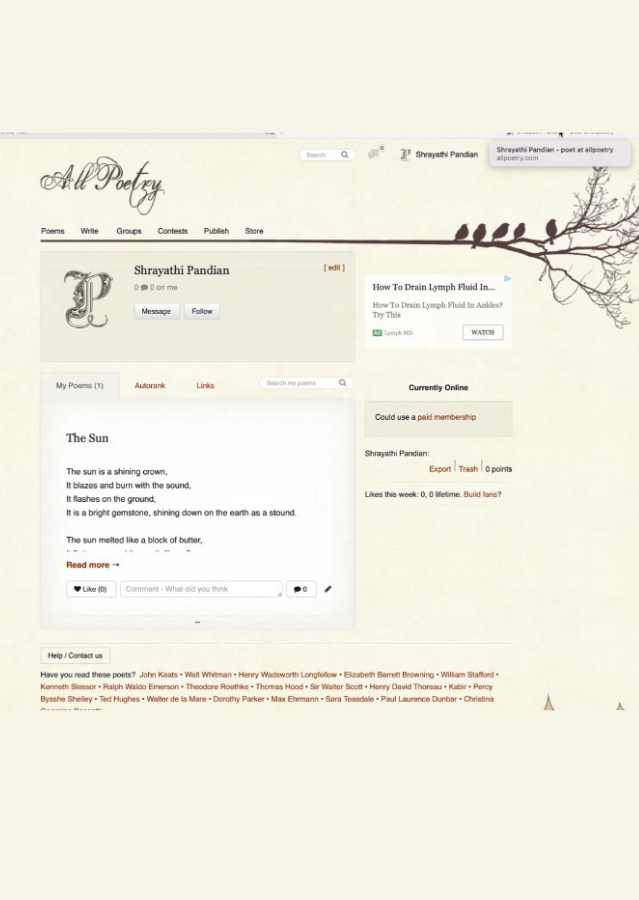
Student Achievements
Making an Impact: 🏆 Student Achievements That Shine | 🌱 Your Growth. Our Mission.




What Our Parents Say About Us
👪 Real Results. Real Parent Voices. 🏆 Futures Built with Care



Parent Testimonials
Success Stories That Speak 🌟🎓 Wins That Inspire Pride 🏆
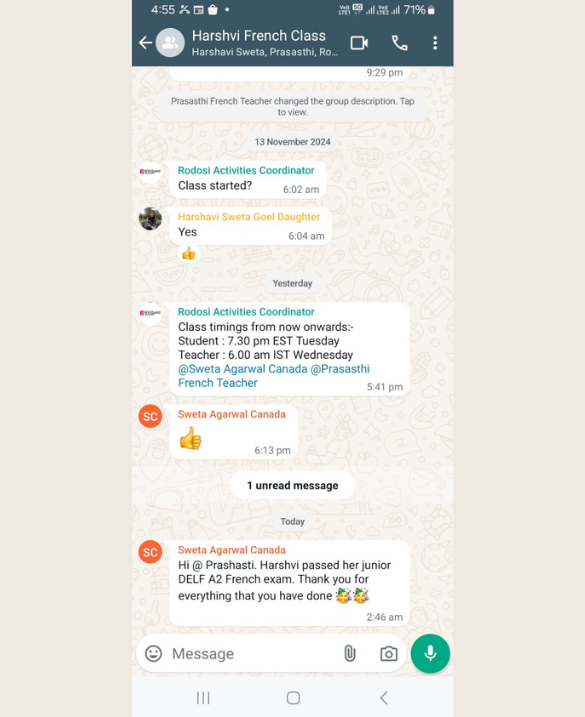
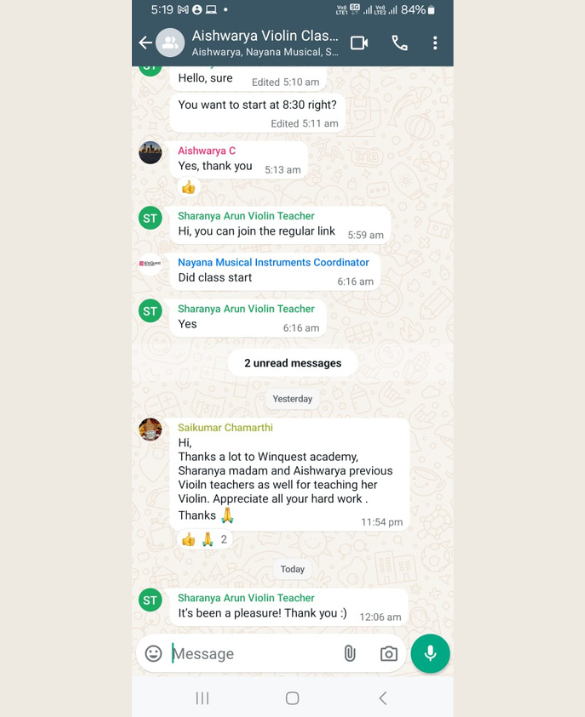
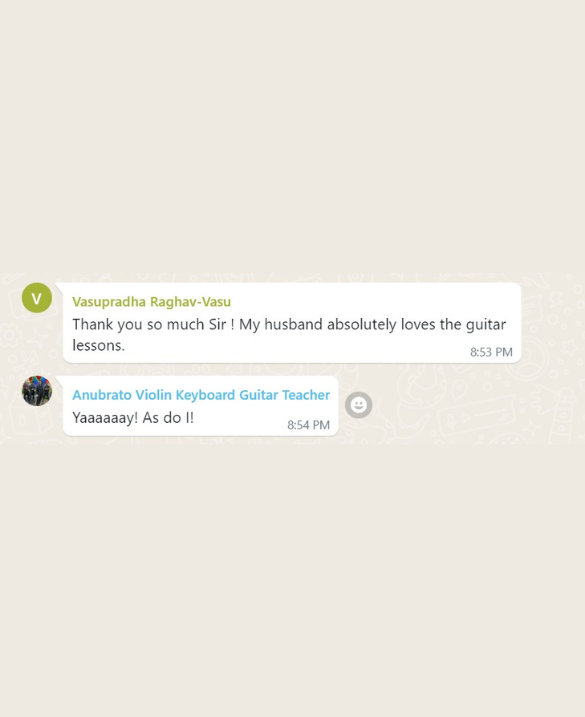
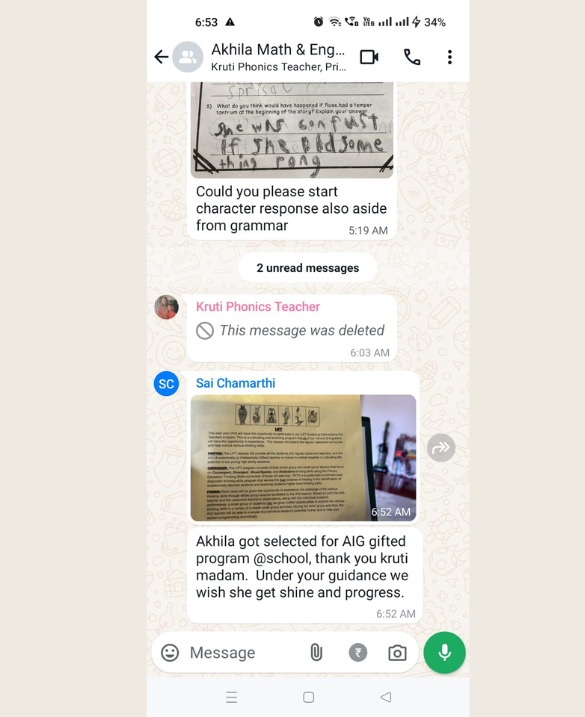
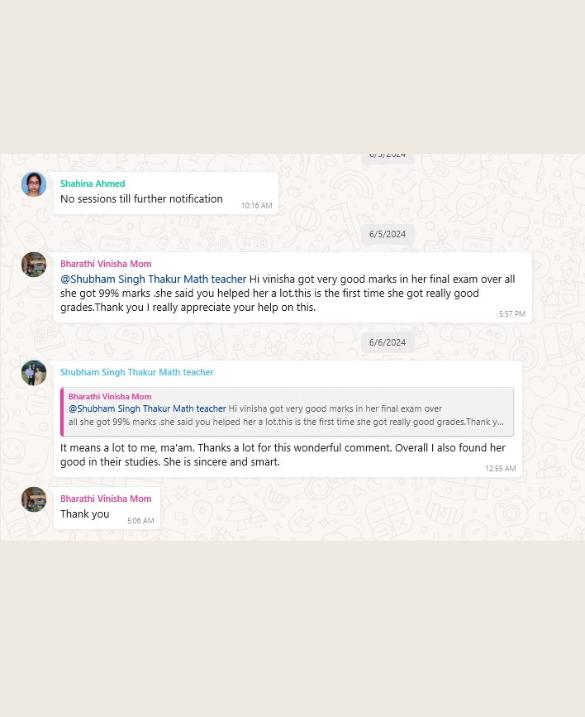
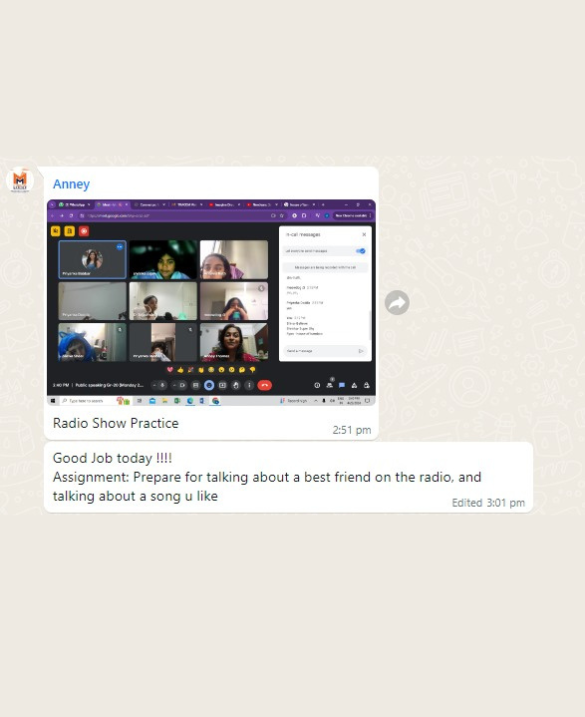
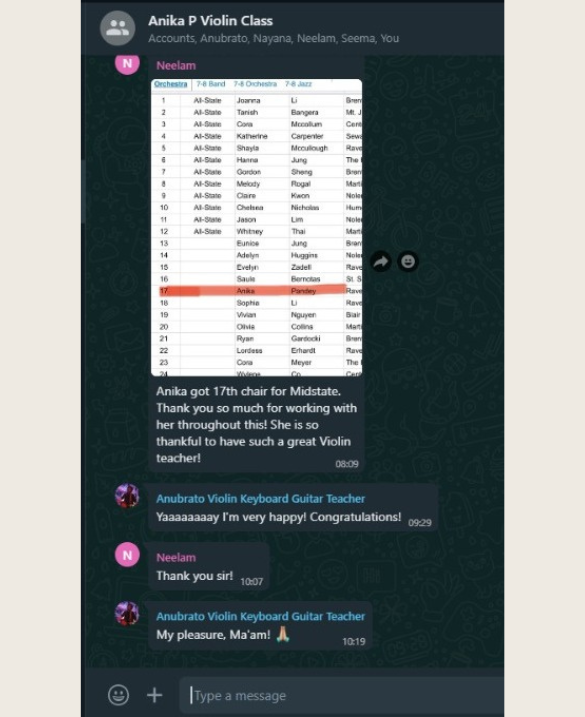
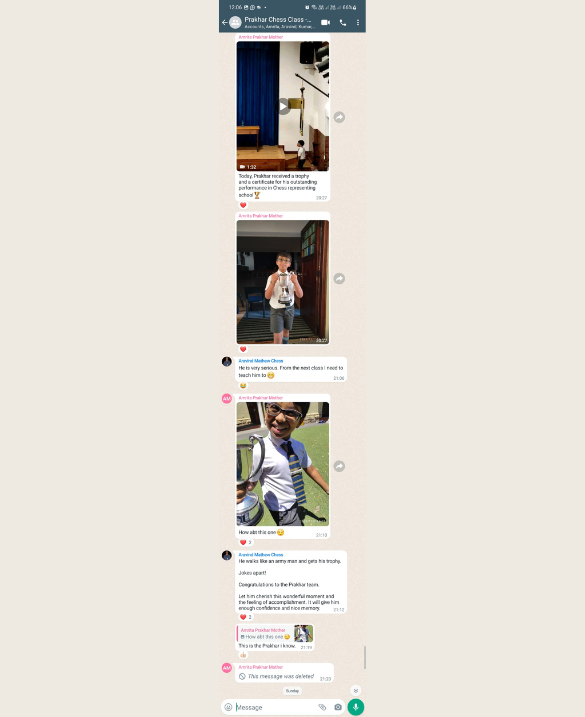
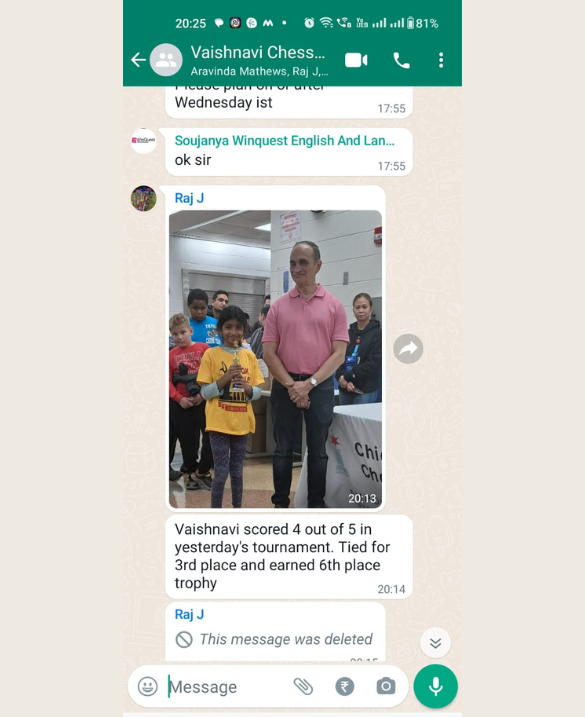
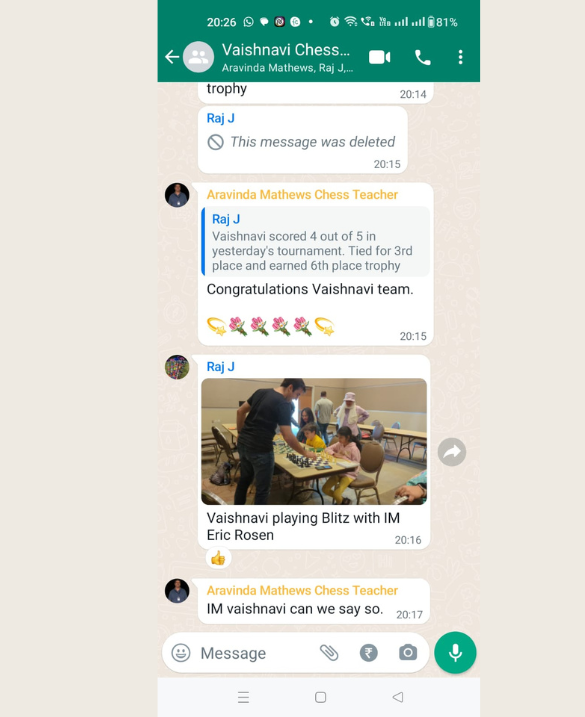
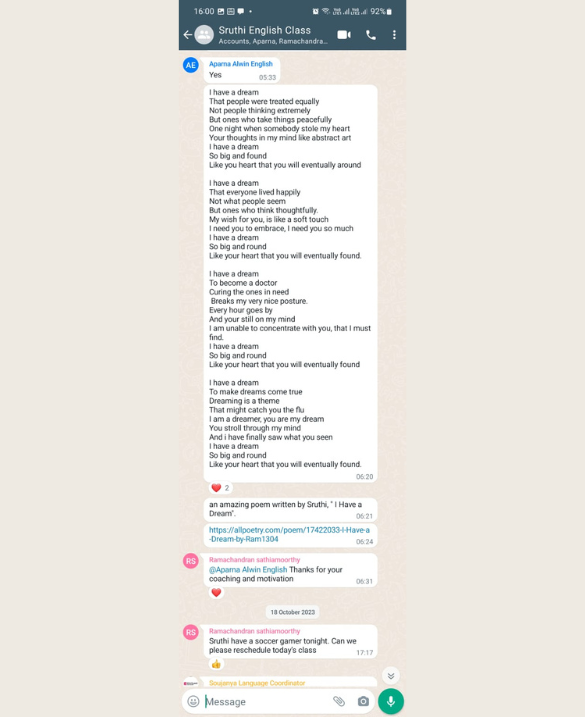
WhatsApp Testimonials
Real Voices from Our WhatsApp Community 💚📚



Latest News and Resources
📰 Learning Updates | 📘 Tips | 🎓 Resources | 💻 Online Courses